How to Install a Suspended Ceiling in the Bathroom? | Detailed Step-by-Step Guide
Bathrooms are the areas of the home most exposed to humidity and temperature fluctuations. Therefore, when decorating a bathroom, both aesthetic and functional solutions should be preferred. Suspended ceiling installations have become one of the most popular modern design elements in bathrooms in recent years. They provide a decorative appearance and offer numerous advantages such as concealing plumbing, lighting applications, and sound and heat insulation. In this guide, we will examine all the details, such as how to install a suspended ceiling for a bathroom, what materials to use, the installation steps, and what points to pay attention to, under separate headings.
Related Services:
What is a Bathroom Suspended Ceiling? What are its Advantages?
A false ceiling in a bathroom is a construction system consisting of special panels placed at a certain distance from the existing ceiling, usually on a metal frame. In recent years, PVC false ceilings, plasterboard false ceilings, tiling systems, and LED-lit designs have become very popular in bathrooms. This system gives the bathroom a modern look while offering many technical advantages.
The main advantages of suspended ceilings:
Allows you to conceal installations: electrical cables, ventilation ducts, water pipes, etc. can be easily concealed.
Enhances lighting: spotlights, LED strips, or decorative panels can be easily installed.
Ease of maintenance: PVC ceilings, particularly those equipped with a fastening and removal system, allow for easy repair in the event of a malfunction.
Contribution to thermal and acoustic insulation: performance is improved when insulating materials are applied in the space between the ceiling and the false ceiling.
Aesthetic integrity: gives the bathroom a modern and tidy appearance.

Ceiling suspension for bathrooms
Materials needed to build a false ceiling in a bathroom
If you plan to install a false ceiling yourself, you must first obtain the appropriate materials. The materials you use will vary depending on the type of ceiling you choose, but in general, you will need the following materials:
Plaster or PVC ceiling panels
Load-bearing metal profiles (U- and C-shaped profiles)
Screw and dowel sets
Cordless drill and screwdriver
Scale and tape measure
Cutter or scissors for cutting profiles
Finishing accessories in silicone, aluminum strip, or PVC
LED spotlights, LED strips, or other lighting
The quality of the materials plays a key role in the longevity of the ceiling. In bathrooms in particular, it is best to choose stainless steel and moisture-resistant products.
How to install a false ceiling in a bathroom? — Step-by-step guide
Installing a false ceiling is a systematic process. By following the steps below, you will achieve a professional-quality result.
Ceiling measurement
Before starting the application, the dimensions of the ceiling must be measured accurately.
The length, width, and angles of the ceiling are checked.
Differences in curvature or height are detected.
The height of the false ceiling is determined. In general, a space of 10 to 15 cm is sufficient.
This step is extremely important to avoid any problems in the future.
Preparation of the metal structure
The metal support profiles are the part that provides the fundamental strength of the suspended ceiling.
First, the U-profiles are screwed to the walls.
The C-profiles are attached to the ceiling using suspension elements.
Care must be taken to ensure that the profiles are well balanced.
At this stage, even the slightest curvature will have a negative impact on the aesthetic appearance of the ceiling.
Electrical preparation and installation
All installation work must be completed before closing the false ceiling.
The lighting points are determined.
Prepare the location for the ventilation vacuum cleaner.
The cables and pipes are secured using insulating tape.
At this stage, it is important to follow the safety rules for electrical connections.
Panel assembly
The installation method varies depending on the material you choose.
For PVC panels:
The panels are attached to each other using an interlocking system.
The first panel is attached to the profile, then the others are installed one after the other.
If necessary, the panels can be easily cut using a utility knife.
For drywall panels:
The plasterboard panels are attached to the profiles using screws.
A joint tape is applied to the joints between the panels.
It is covered with plaster and then sanded.
This step is the most critical, as it determines the final shape of the ceiling.
Lighting and finishing touches
Once the panels have been installed, the lighting elements are mounted.
LED spotlights are installed by drilling holes.
LED strips can be applied to cardboard or a concealed light strip.
End profiles give the edges of the ceiling a clean and even appearance.
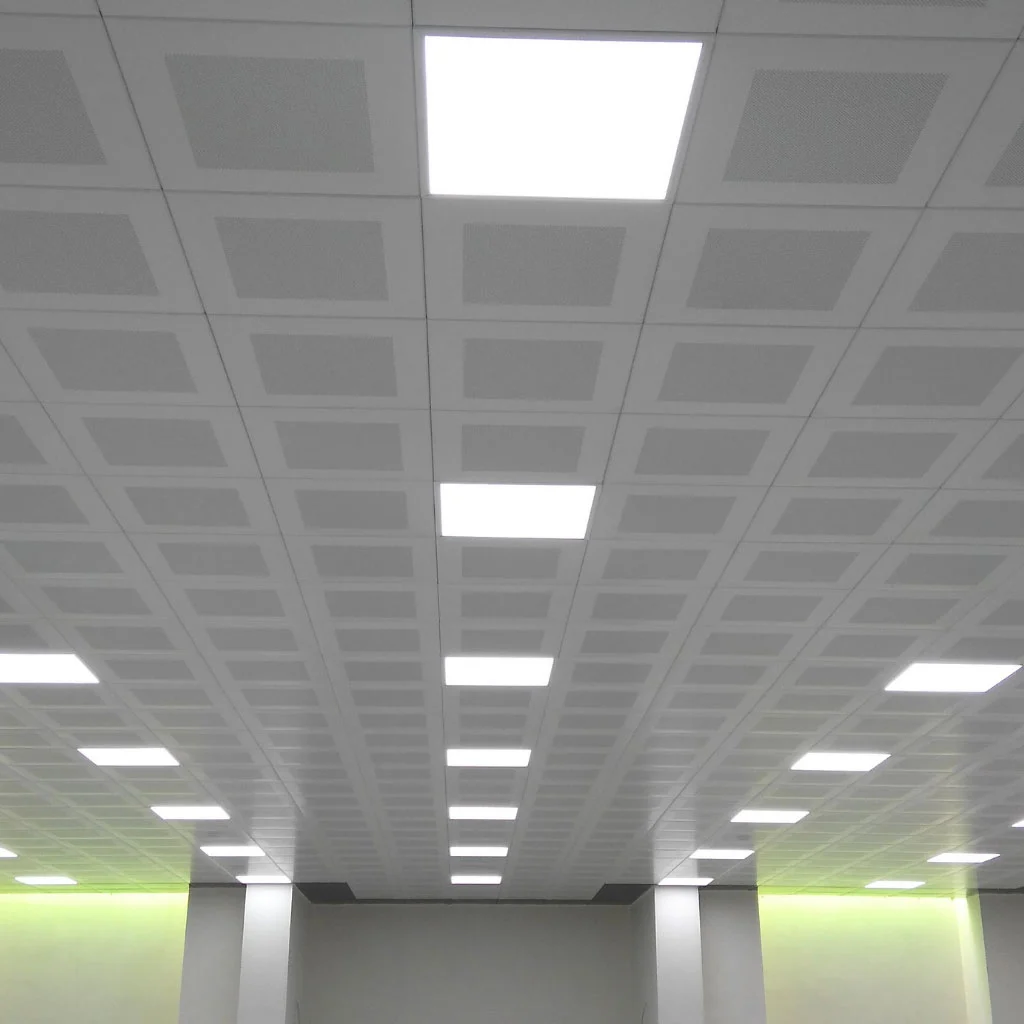
Points to consider when installing a false ceiling in a bathroom
Installing a false ceiling is a delicate job, and attention should be paid to the following points:
Materials with low moisture resistance should not be used.
High-quality LED products should be preferred.
The ceiling height should not be too low.
It is essential to provide a ventilation system.
If you are using plasterboard, choose water-resistant boards (green plasterboard).
Metal profiles must be rustproof.
The right materials and professional application ensure that the ceiling will remain in good condition for years to come.
Prices for suspended ceilings for bathrooms
Prices vary depending on the materials used, the ceiling area, labor costs, and the type of lighting used.
To give a general idea:
Suspended PVC ceilings are generally more affordable.
Plasterboard ceilings are more attractive, but more expensive.
LED lighting and special designs may increase the price.
That is why all details must be taken into account when calculating costs.
Conclusion: a false ceiling is essential for a modern, durable, and stylish bathroom!
Installing a false ceiling in your bathroom is a very advantageous solution, both aesthetically and functionally. By choosing the right materials, hiring a professional, and opting for suitable lighting, you can give your bathroom a modern and spacious look. The steps outlined in this guide provide a comprehensive plan of action for installing a false ceiling in your bathroom. If you are considering renovating your bathroom, please do not hesitate to contact us at


